ROE vs. ROI: The Metric Most Investors Ignore
ROE vs. ROI: The Metric Most Investors Ignore
Admit it. You’ve probably thought once or twice in your life that it would make sense to own an investment property.
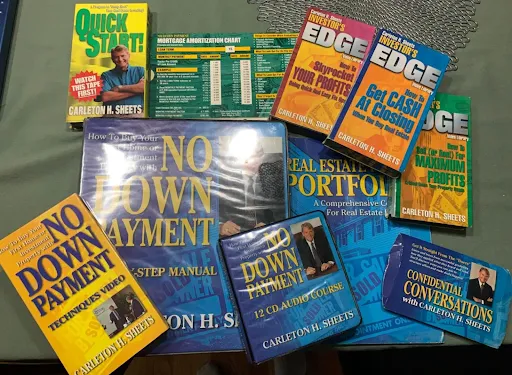
Maybe you saw a Dean Graziosi late night infomercial. Or, maybe you were like me and bought a Carlton Sheets VHS training pack off a late night infomercial back in the 1990s. Their focus was on single family fix and flips.

I did that and made some money on some and lost some money on others. The real key isn’t the proverbial “quick buck” with flips because there’s a lot of capital to lay out, teaming up with lenders, having to run a renovation project with multiple moving parts.
And, in the end, you lose a big chunk of what you earn to taxes and that’s where most of the investors doing fix and flips lose their shirt. They have no record keeping, they don’t want to run a renovation project, and their poor record keeping leads to tax issues.
Buy and hold, especially for multifamily properties, is a much better strategy when bought right.
But your challenge is that you don’t know how to do it. You’re afraid of losing money or putting yourself in a tough situation.
Or you’ve heard horror stories about bad tenants or 2am calls to unclog toilets.
Let’s put all of those myths aside and just talk about the financial myths that have prevented you from moving towards financial freedom. I get it. I’ve been there! And I’ve learned a lot over the years working with a lot of people.
Most so-called “investors” are running their portfolios with the same lazy math as everyone else—and it’s costing them a fortune. They focus on cash flow and forget that cash flow is only 1 of 4 important metrics to the investment real estate money machine.
If you already own property in Massachusetts or Rhode Island (or anywhere in the US for that matter… but I work in MA/RI so that’s my focus), chances are you’re patting yourself on the back for “positive cash flow” and a nice appreciation curve. You’re also falling into the same trap as 90% of landlords: You’re measuring the wrong things, and it’s bleeding your wealth dry.
The Cash Flow Myth (And Why It’s Not Enough)
Every real estate seminar, every “guru,” every spreadsheet jockey on BiggerPockets hammers cash flow like it’s the only thing that matters. But here’s the gut punch: Cash flow is only 25% of the equation. If you’re ignoring appreciation, depreciation, and principal reduction, you’re not investing—you’re just collecting rent checks and hoping for the best (Investopedia, NAR).
The Real Reason Most Properties Underperform
Most owners have no idea what their property is actually doing for them. They see a few hundred bucks a month in positive cash flow and think they’re winning.
They have a CPA put their tax returns together but haven’t educated themselves on all of their depreciation options or how it affects their taxes. Because the reality is that most CPAs don’t know all of the depreciation you can take. They break up the purchase price into land value and building value, typically… and set the land at 20% and the building at 80% and depreciate the building over 27.5 years (4 units and under) or 39 years (5 units and up)... all while leaving Personal Property and Land Improvement appreciation out of the mix.
Anyway…
After five, ten, fifteen years, or more the equity piles up, your returns actually shrink (yes, it’s true… the longer you hold a property, the more your return decreases), and suddenly your “great investment” is quietly outpaced by a boring index fund. This is what I call Wealth Leakage—and it’s everywhere (Federal Reserve).
It happens ALL THE TIME! Most investors hold onto their property for far too long and lose the tax benefits of having the property.
Why “Set It and Forget It” Is a Lie
The industry tells you to buy, hold, and let time do the work. But time is a double-edged sword. Sure, your property appreciates, but so does your equity—and unless you’re actively measuring the return on that equity, you’re probably earning less than a high-yield savings account.
Yes, the truth often hurts.
The market doesn’t care how long you’ve owned your building. It cares how hard your money is working right now (Forbes).
Too many investors plan to keep the property and allow the cash flow to fund their retirement, and that can work… and there are far better plans.
Listen, do “the big guys” hold onto property forever to collect the cash flow?
No. Most don’t hold onto a property longer than 7 years and certainly not longer than 10. Why? They’re always looking to improve their return and maximize their tax depreciation.
You should be doing the same!
The “Winner’s Curse” (And Why Most Investors Are Afraid to Look)
Here’s the dirty secret: Most landlords are terrified to run the real numbers. Why? Because deep down, they know their so-called “investment” is underperforming. They’re afraid to sell, afraid to exchange, afraid to even ask the question: “Is there something better I could be doing with my money?”
So they do nothing.
And if you’re someone who’s been sitting on the sidelines—paralyzed by analysis, worried about making a mistake—let me tell you: The real mistake is not starting.
The only way to win is to get in the game and measure what matters. The right property, evaluated the right way, can change your life. The wrong one can waste a decade.
The Challenge: Stop Settling for “Good Enough”
If you’re still reading, you’re not like everyone else. You want to know whether your property is a silent wealth-builder or a silent killer.
You want to know if you’re leaking opportunity, year after year, while the market moves on without you.
You want to know if you’re missing out on the next big move because you’re stuck in the comfort zone of “positive cash flow.”
Here’s What To Do (If You’re Serious)
Don’t run the numbers yourself—because you’ll use the same tired formulas everyone else does. Let’s run a Wealth Leakage Diagnostic™ together (yes, I’m trademarking that!). I’ll show you how your property stacks up—factoring in appreciation, depreciation, principal paydown, and opportunity cost. As much as I love a good fluffernutter, no fluff. Just real numbers.
If you’re already an owner, you might be shocked at what you find. If you’re still on the sidelines, you’ll finally have a roadmap for what winning really looks like because we’ll evaluate all 4 money aspects to determine which properties are even worth taking a look at and which you should pass on without a second thought.
Ready to stop guessing and start building real wealth? Schedule your free diagnostic and let’s see if you’re sitting on a gold mine—or a ticking time bomb.
References: