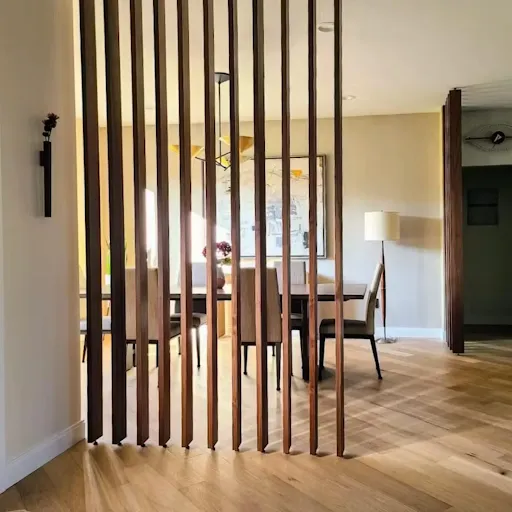
The Quiet Shift Away From “Open Everything”
The Quiet Shift Away From “Open Everything”

For more than a decade, “open concept” was the default answer.
Tear down the walls.
Open the kitchen to the living room.
Let everything flow.
And for a while, it worked — especially when homes were used primarily as places to land between work, school, and weekends out.
That’s no longer how people live.
What’s happening now isn’t a return to formal dining rooms or chopped-up floor plans. It’s something quieter and more nuanced: buyers are looking for separation without isolation. This is a KEY distinction.
What buyers are actually reacting to
In showings, buyers don’t say, “I want walls.”
They say things like:
“Where would I take a call?”
“Could someone work here without hearing the TV?”
“Is there a way to close this off sometimes?”
Those questions didn’t come up much five years ago. Now they’re constant.
The shift isn’t aesthetic — it’s functional. Homes are doing more jobs:
office
classroom
retreat
entertaining space
And often all at once.
Pure openness doesn’t support that anymore. In reality, it never did. There is such a thing as too open.
The rise of partial separation
Instead of fully open layouts, buyers are responding to:
pocket doors
wide cased openings
partial-height walls
glass or slatted dividers
offset sightlines between rooms
These features allow spaces to connect visually while still being controllable. Buyers have moved away from totally open to visually open… because it’s very hard to furnish and decorate totally open. Also,
Noise can be managed.
Privacy can be created.
Light still travels.
It’s not about closing things off permanently — it’s about optional boundaries.
Acoustics matter more than square footage
One of the biggest surprises for buyers is how much sound influences how a home feels.
Two houses with identical square footage can feel completely different if:
one echoes
one absorbs sound
one allows noise to travel unchecked
Buyers might not use the word “acoustics,” but they feel it immediately. We have an innate sense of that.
That’s why homes with:
soft transitions
offset rooms
materials that dampen sound
often feel calmer — even if they’re not larger.
And calmer homes sell better.
Why this matters for resale (and renovations)
For homeowners thinking about renovating, this shift matters.
The old advice was:
“Open it up — buyers want open.”
The better advice now is:
“Create flexibility — buyers want options.”
Removing every wall can actually reduce appeal if it eliminates a quiet corner, a defined workspace, or a sense of retreat.
On the flip side, adding thoughtful separation — even subtly — often increases perceived livability without increasing square footage.
The bigger takeaway
This isn’t a design trend.
It’s a lifestyle correction.
People aren’t rejecting openness — they’re rejecting exposure.
Homes that acknowledge that reality feel more livable, more modern, and more aligned with how people actually use space today.
The most successful layouts right now don’t shout their design choices.
They quietly work.
References
Architectural Digest. (2024). Why open floor plans are evolving.
https://www.architecturaldigest.com
Dwell Magazine. (2024). The rise of flexible floor plans.
https://www.dwell.com
Houzz Research. (2024). Home renovation and design trends.
https://www.houzz.com/research