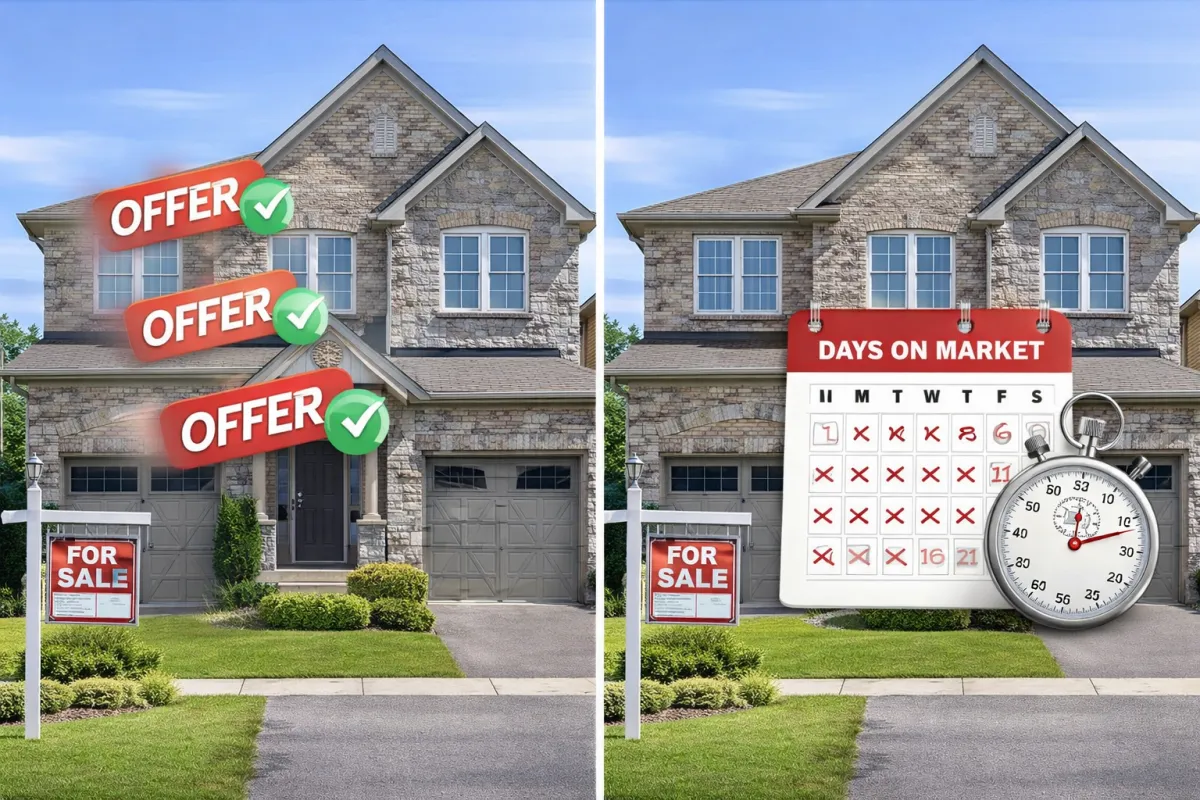
Price Bands That Move vs. Price Bands That Stall: What Real Market Behavior Is Telling Us in Massachusetts & Rhode Island
📊 Price Bands That Move vs. Price Bands That Stall:
What Real Market Behavior Is Telling Us in Massachusetts & Rhode Island
Agents often talk about “the market” as if it’s one thing.
It isn’t.
Across Massachusetts and Rhode Island right now, the market is sharply divided — not by town, not by county, and not even by property type — but by price band.
Some homes still move quickly and decisively. Others sit, linger, and slowly lose leverage.
This STAT is about understanding why — and how agents can use that insight to guide better conversations with buyers and sellers.
Because that’s what’s truly important - having conversations that engage, teach, and make consumers understand that you’re not “average”.
The Market Isn’t Slow — It’s Selective
Recent MLS activity, combined with Realtor.com and Redfin trend data, shows a consistent pattern across both states:
Homes priced within locally affordable, psychologically comfortable ranges continue to absorb inventory.
Case in point? I wrote a very strong offer for a first-time buyer client for 5 Freetown St, Lakeville last week – 5.5% over asking, strong downpayment, great financing… and ends up we were 1 of 23 offers. I’m betting the successful offer was more than 11% over asking and probably cash.
Homes priced above those comfort thresholds face:
longer days on market
more frequent price adjustments
increased buyer hesitation
tougher negotiation dynamics
You know this because you look at the MLS and you see those homes that have been on for over 100 days.
This doesn’t mean buyers disappeared.
It means risk tolerance changed.
Buyers are still active — but only where the consequences feel manageable.
Where Homes Still Move
In both MA and RI, faster-moving price bands tend to share common traits:
monthly payments fall within familiar comfort zones
financing options remain flexible
buyers feel mistakes are survivable
competition, while real, feels navigable
These homes don’t always sell for less — they sell with confidence.
Buyers in these ranges are decisive because uncertainty feels contained.
For agents, this is where preparation, pricing discipline, and clear strategy still create leverage.
Where Resistance Builds
As price bands push beyond local affordability thresholds, behavior shifts noticeably.
In higher price ranges, buyers tend to:
watch longer before acting
require more justification
attach contingencies more often
hesitate until certainty feels higher
Importantly, this is not about poor listings or inferior homes.
It’s about psychology.
The higher the perceived financial risk, the more buyers seek reassurance — and the slower decisions become.
This is where agents who rely on optimism struggle… and where agents who explain behavior excel.
Fear Explains More Than Rates
It’s easy to blame interest rates for hesitation.
But consumer behavior suggests something deeper.
Buyers and sellers in higher price bands consistently express fear around:
overpaying
getting stuck
losing flexibility
making a decision that can’t be reversed
These fears concentrate most heavily above local comfort ceilings.
That’s why two homes in the same town can behave completely differently — even with similar conditions and marketing.
Agents who understand this don’t argue with clients.
They reframe risk… and that’s a big difference.
What “Reframing Risk” Actually Means
Reframing risk is not minimizing it. It’s moving it from the emotional bucket to the strategic bucket.
Most clients experience risk like this:
“What if we’re wrong?”
Agents who reframe risk help clients ask a better question:
“Where does risk actually live — and how do we manage it?”
That shift alone lowers anxiety and increases trust… because there is no such thing as zero risk.
🔑 Seller Examples — Reframing Risk
Instead of Reassurance (What Most Agents Say)
“I think we’ll be fine.”
“The market will tell us.”
“We can always adjust later.”
⬆️ This feels comforting — but it increases risk because it delays clarity.
Reframing Risk (What Strong Agents Say)
Example 1: Pricing Risk
“The biggest risk for sellers right now isn’t pricing too low — it’s pricing too high and missing the first two weeks, when buyers are paying the most attention.”
This reframes risk from price to timing.
Example 2: Adjustment Risk
“Price reductions don’t just reduce price — they reduce leverage. Buyers assume something went wrong and negotiate harder.”
Now the seller sees risk as perception, not dollars.
Example 3: Control vs. Comfort
“We can make this feel comfortable, or we can make it competitive. My job is to show you the tradeoff.”
That removes emotion and introduces choice.
🔑 Buyer Examples — Reframing Risk
Instead of Pressure (What Clients Fear)
“Rates are going up.”
“Homes are selling fast.”
“You need to move quickly.”
⬆️ This sounds like urgency — but triggers resistance.
Reframing Risk (What Trusted Advisors Say)
Example 1: Waiting Risk
“Waiting feels safer, but the real risk right now is losing flexibility — fewer options, tougher competition, and less room to negotiate.”
Now waiting is no longer neutral — it has a cost.
Example 2: Inspection Fear
“Waiving inspections isn’t the risk — not understanding what you’re waiving is. Let’s talk about how buyers manage that risk intelligently.”
Risk moves from action to information… and also note tha
t buyers are not allowed to waive an inspection in Massachusetts… and sellers are not allowed to require it per the new law effective October 15, 2025.
Example 3: Payment Anxiety
“The question isn’t ‘Can you afford this?’ — it’s ‘How comfortable are you with this payment under different scenarios?’”
This reframes fear as planning.
🧠 The Pattern (What Agents Should Notice)
Every reframe does three things:
Names the real risk (timing, leverage, perception, flexibility)
Explains why it exists (buyer behavior, market psychology)
Offers a strategic choice, not a directive
That’s why it feels calm instead of salesy.
🗣 One-Line Reframes Agents Can Memorize
“The risk isn’t action — it’s acting without a plan.”
“Comfort and leverage rarely exist at the same time.”
“The market rewards clarity early and punishes hesitation later.”
“Waiting isn’t neutral — it’s a strategy with a cost.”
Why This Works
Clients don’t need certainty. They need orientation.
When agents reframe risk:
conversations slow down
emotions settle
decisions speed up
trust deepens
That’s why reframing risk is the bridge between data and leadership — and why it fits perfectly with everything you’re teaching in this series.
How This Changes Buyer Conversations
When agents understand price-band behavior, buyer conversations become calmer and clearer.
Instead of:
“The market is tough right now.”
They can say:
“The market is selective. Where you’re shopping, buyers still act quickly — but only when they understand the tradeoffs.”
This shifts buyers from waiting for certainty to choosing strategy.
How This Changes Seller Conversations
For sellers, this insight replaces emotional pricing debates with behavioral reality.
Instead of defending a number, agents can explain:
“Homes priced within this band are still moving decisively. Above it, buyers hesitate longer — not because the home lacks value, but because risk feels higher.”
That single explanation often does more than pages of comps. And the best part is that it’s 100% true and the type of insight a professional shares versus a hobbyist.
Where This Ties Back to Polarization
This STAT connects directly to the TIP.
Agents who understand price-band behavior:
stop trying to reassure everyone
stop hedging uncomfortable truths
stop pretending all strategies work equally
They take a clear position.
They explain how the market behaves — and let clients decide whether that leadership is what they want.
That’s the Attractive / Repulsive Filter at work.
The Real Advantage
Markets don’t stall evenly.
They stall where fear concentrates.
Agents who recognize that don’t need to persuade harder. They need to explain better.
And the agents who explain behavior — not just prices — become the ones buyers and sellers trust most.
Where We’re Going Next
Next week, we’ll complete the loop.
We’ll take the one-afternoon market research process and show how to turn it into:
listing appointment talking points
buyer consult scripts
and weekly content ideas that reflect what consumers are actually asking
Because insight only matters if it shows up in conversation.
Now we’re going to get into some bonus material on how to identify these price zones in MLSPIN (you can do it in RI Statewide… it’s just a lot more work because you can’t pull a report with all of the data we see in an Area Market Survey report).
Here are the pieces of the Area Market Survey:


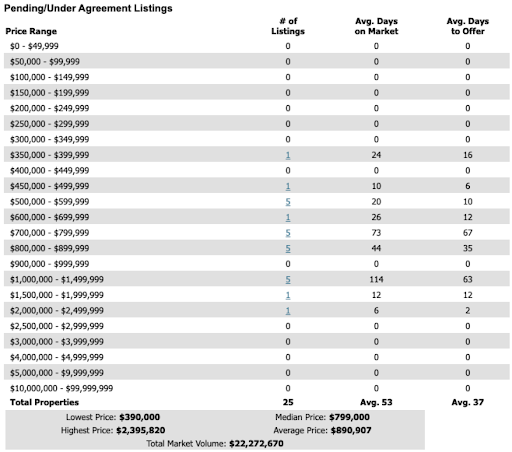


📊 How to Identify the Price Zones Where Homes Still Move
MLS Area Market Surveys don’t tell you what will happen. They tell you where buyers are already voting with their feet.
The key is knowing what to look for — and where.
Let’s break this down using the actual Easton SF data shown above.
1️⃣ The Confidence Zone — Where Buyers Still Act Quickly
In the Sold Listings section, one pattern jumps out immediately.
Homes priced between $500,000 and $900,000 account for the bulk of closed sales, with relatively controlled days on market and strong sale-to-list ratios:
$500K–$599K
23 sales
Avg DOM: 54 days
Avg Days to Offer: 39
SP:LP ≈ 101%
$600K–$699K
21 sales
Avg DOM: 44 days
Avg Days to Offer: 34
SP:LP ≈ 101%
$700K–$799K
29 sales
Avg DOM: 40 days
Avg Days to Offer: 27
SP:LP ≈ 100%
$800K–$899K
27 sales
Avg DOM: 45 days
Avg Days to Offer: 23
SP:LP ≈ 101%
What this tells us:
Buyers in this range are still decisive. They’re submitting offers within 3–5 weeks, competing enough to hold prices near (or above) list, and closing consistently.
This is the liquidity core of the market — where pricing correctly creates leverage.
2️⃣ The Resistance Zone — Where Buyer Hesitation Increases
Once prices push past $900,000, behavior changes noticeably.
From the Sold Listings data:
$900K–$999K
12 sales
Avg DOM: 29 days
Avg Days to Offer: 19
SP:LP ≈ 100%
$1.0M–$1.5M
26 sales
Avg DOM: 51 days
Avg Days to Offer: 34
SP:LP ≈ 99%
Even though sales still occur, time increases and leverage softens.
Now layer in Price Changed Listings:
$1.0M–$1.5M saw
17 listings
32 price changes
Avg total reduction: -7.27% (≈ -$89,000)
What this tells us:
Buyers still exist — but they hesitate longer and punish over-pricing more aggressively.
This is where:
strategy matters more than optimism
pricing errors cost real money
sellers need clarity, not reassurance
3️⃣ The Aspirational Zone — Where Patience Replaces Leverage
Above $1.5M, the market becomes dramatically thinner.
From Sold Listings:
$1.5M–$1.99M
2 sales
Avg DOM: 100 days
Avg Days to Offer: 87
$2.0M–$2.49M
1 sale
Avg DOM: 103 days
Avg Days to Offer: 77
And from Active Listings:
$1.5M–$1.99M
Avg DOM: 155 days
$2.0M–$2.49M
Avg DOM: 179 days
What this tells us:
This isn’t a “bad market” — it’s a low-velocity market.
Buyers here:
move slowly
negotiate harder
expect justification
are less forgiving of mistakes
Agents must shift expectations from speed to precision.
4️⃣ Price Reductions Reveal Where Sellers Misread the Market
The Price Changed Listings section shows exactly where sellers overestimated demand.
Notable examples:
$800K–$899K
Avg reduction: -6.08% (≈ -$53,800)
$900K–$999K
Avg reduction: -7.15% (≈ -$67,900)
$1.5M–$1.99M
Avg reduction: -7.50% (≈ -$130,145)
$2.0M–$2.49M
Avg reduction: -9.75% (≈ -$226,500)
What this tells us:
The higher the price band, the higher the penalty for missing the market early.
This is why pricing strategy is not about “getting lucky” — it’s about entering the correct behavior zone from day one.
5️⃣ Expired Listings Show Where Hope Replaced Strategy
The Expired Listings section completes the picture.
Expired homes cluster disproportionately in higher price ranges:
$800K–$899K → Avg DOM 161 days
$900K–$999K → Avg DOM 120 days
$1.5M–$1.99M → Avg DOM 161 days
What this tells us:
Expiration isn’t random. It’s the result of:
entering a thin zone without adjusting strategy
relying on optimism instead of behavior
failing to reframe risk early
The Strategic Takeaway Agents Should Remember
Price zones that move are the zones where buyers feel mistakes are survivable.
This MLS report shows that clearly.
Once agents learn to read price bands as behavior bands, they stop arguing with sellers — and start guiding them.
That’s the difference between reporting data and leading decisions.
Seller Pricing Script: Reframing Risk Without Arguing
Step 1: Acknowledge the instinct (without agreeing)
“I understand why you’d want to start higher. Most sellers feel that way — especially when they see headlines or hear about sales that went over asking.”
This validates emotion without validating the strategy.
Step 2: Shift from price opinion → buyer behavior
“Instead of guessing where we hope the market goes, I want to show you where buyers are actually acting right now.”
Now you’ve changed the frame.
You’re no longer debating price — you’re discussing behavior.
Step 3: Introduce the price-band reality (using the report)
“In Easton over the past year, homes priced between about $500,000 and $900,000 are still attracting offers within 3–5 weeks and closing close to list price.”
“Once we move above that range, the behavior changes — days on market stretch, price reductions increase, and leverage shifts to the buyer.”
You’re describing patterns, not pushing an agenda.
Step 4: Name the real risk (without fear-mongering)
“The risk isn’t that your home won’t sell.
The risk is that starting too high moves us into a price zone where buyers wait — and waiting costs leverage.”
This is a key reframe:
Risk ≠ failure. Risk = lost leverage.
Step 5: Use price reductions as evidence, not threats
“In the higher price bands this year, sellers who missed the market early ended up reducing by 6–9% on average — not because the homes were bad, but because buyers used time to negotiate.”
You’re letting the data deliver the message.
Step 6: Give the seller control (two-path close)
“So we really have two strategies.”
“Option one: We price where buyers are already acting and try to create urgency early — that’s where sellers still hold power.”
“Option two: We start higher, understanding that the market will likely push back with time instead of offers — and we adjust later.”
“My job is to help you choose which risk you’re more comfortable taking.”
This preserves autonomy while clearly defining consequences.
Step 7: State your professional position clearly
“If it were my house, I’d rather price once with leverage than reduce later without it.
That’s the strategy I’m comfortable executing — and I’ll support whichever path you choose.”
This is ethical polarization in action.
Optional Short Version (for confident sellers)
“Pricing high doesn’t fail — it just shifts power to the buyer.
Pricing correctly early keeps power with you.”
That single sentence often lands harder than a chart.
Why You Should Incorporate This Script and Why it Works
✔ It doesn’t argue
✔ It doesn’t apologize
✔ It uses the MLS data as a neutral referee
✔ It reframes risk instead of fighting emotion
✔ It positions the agent as an advisor, not a persuader
Most importantly: It turns “I want to try higher” into “Which risk do I want to take?”
That’s where decisions actually get made.
Buyer Script: Reframing Risk Without Pressure
Step 1: Normalize the fear (without validating delay)
“Everything you’re feeling makes sense. Buying right now feels risky — especially with rates, headlines, and mixed advice everywhere.”
This acknowledges emotion without endorsing inaction.
Step 2: Reframe what the risk actually is
“What most buyers don’t realize is that there are two different risks — and they’re not the ones people usually talk about.”
You’ve just opened a gap. This is the difference between a professional advisor and a salesperson. A professional advisor doesn’t need to practice “objection handling” because you’re not creating objections… you’re demonstrating a gap in knowledge that you have and the client does not because you are a professional.
Step 3: Name the two risks clearly
“There’s the risk of buying now — paying today’s price, today’s rate.”
“And there’s the risk of waiting — higher competition, fewer choices, or needing to stretch more later.”
This reframes waiting as an active decision, not a neutral one.
Step 4: Anchor to real market behavior (price zones)
“In our market right now, homes priced under about $900,000 are still moving quickly — not because buyers are reckless, but because that’s where supply and demand still meet.”
“Above that range, homes sit longer and sellers negotiate more. Below it, buyers still compete.”
This uses price-band logic, not emotion.
Step 5: Address the overpaying fear directly
“Overpaying doesn’t usually happen because someone buys at the wrong time — it happens when buyers don’t understand why a home is priced where it is.”
“My job isn’t to push you to buy. It’s to help you recognize when a price reflects real demand versus seller optimism.”
This positions the agent as a risk translator, not a cheerleader.
Step 6: Reframe ‘waiting’ as a cost
“Waiting feels safe because nothing changes today.”
“But what usually changes is the number of buyers competing for the same homes — and that’s where buyers lose control.”
This is a gentle but powerful truth.
Step 7: Give the buyer agency (decision framing)
“So the real question isn’t ‘Should you buy now or later?’”
“It’s: Which risk do you want to manage — price risk or competition risk?”
That’s the moment clarity replaces fear.
Also, all signs point to prices continuing to rise (just not as rapidly)... and if rates continue to fall, prices will rise more rapidly and won’t solve affordability.
Step 8: State your role clearly
“My role isn’t to predict the market. It’s to help you understand risk well enough to act confidently when the right opportunity shows up.”
This reinforces leadership without pressure.
Short, High-Impact Version (for showings or follow-ups)
“Waiting feels safe — but in this market it usually means competing later, not paying less.”
or
“The goal isn’t to time the market. It’s to understand risk better than the other buyers.”
Why This Script Works
✔ It respects fear without feeding it
✔ It avoids market predictions
✔ It uses behavioral data, not opinions
✔ It keeps the buyer in control
✔ It aligns perfectly with your 80/20 theme
Most buyers don’t need reassurance. They need clarity about trade-offs.
This script gives them that.