Scientists Are Trying to Talk to Dolphins With AI
Scientists Are Trying to Talk to Dolphins With AI
Finally... an AI Story That Doesn’t Sound Like a Sci-Fi Lawsuit Waiting to Happen
Most AI headlines these days sound like they were written by two people: one trying to terrify you, and the other trying to raise venture capital.
AI is replacing jobs. AI is faking voices. AI is writing term papers, making weird art, flooding the internet with nonsense, and apparently inching us closer to a future where nobody knows what’s real except maybe your dog... and even he seems unsure.
So it’s refreshing to find an AI story that feels less like dystopia and more like actual curiosity.
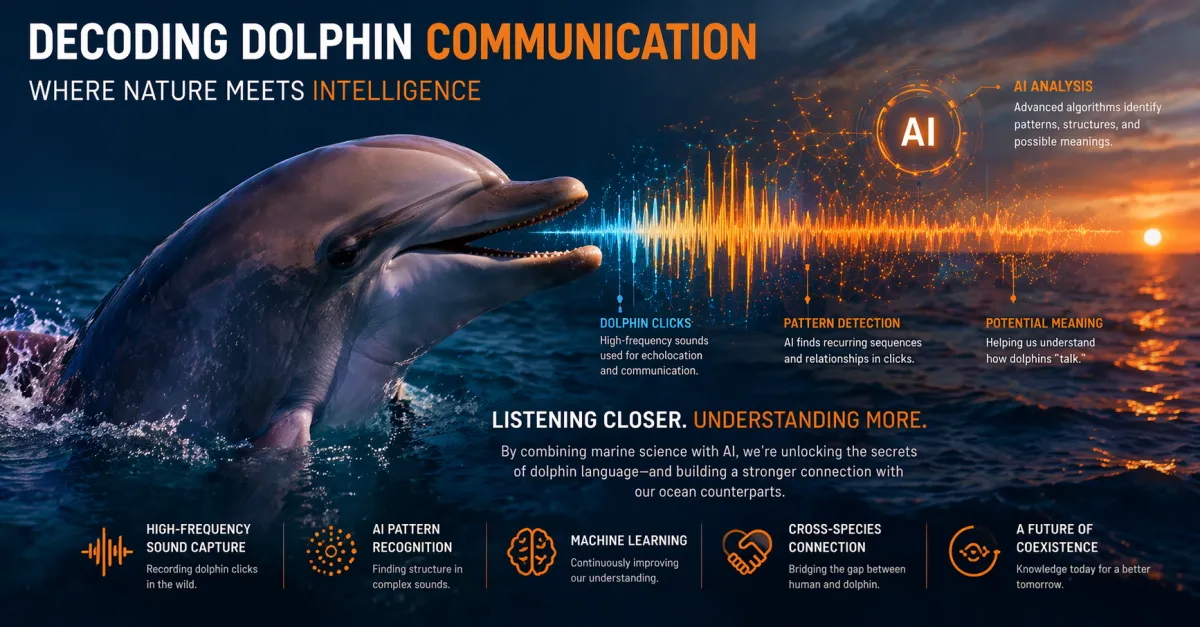
Scientists are now using AI to help study dolphin communication. Not in a “we built a robot dolphin” kind of way... but in a genuinely fascinating effort to recognize, organize, and better understand the sounds dolphins use to interact with each other.
And honestly? Good. If we’re going to build machines that can process giant amounts of information, maybe one worthwhile use is helping us understand a species that has been acting smarter than half the internet for decades.
Why This Is Actually Cool
Dolphins are not just noisy sea performers doing flips for frozen fish. They are highly social, intelligent animals with complex behavior, long-term bonds, and communication patterns researchers have been trying to decode for years.
The challenge is that dolphin vocalizations are fast, layered, repetitive, contextual, and hard for humans to sort at scale. That’s where AI becomes useful. It can process huge volumes of sound, detect patterns, and help researchers identify recurring structures that would take humans far longer to organize manually.
That does not mean we are five minutes away from asking a dolphin how it feels about inflation.
It means scientists may finally have better tools to study whether certain sounds consistently connect to certain behaviors, interactions, or social signals.
Which is a lot more interesting — and a lot more hopeful — than another article about AI making fake headshots of people who do not exist.
The Bigger Point
This is the version of AI people should pay more attention to.
Not because it’s cute.
Because it’s useful.
AI does not have to be impressive only when it is replacing something human. Sometimes it is most impressive when it helps humans understand something we could not easily decode on our own.
That is a much better story.
Using machine learning to help interpret animal communication is the kind of thing that reminds you technology can still be about discovery, not just efficiency, manipulation, or turning every creative profession into a hostage negotiation.
Why It Hits a Nerve
Maybe part of why this story lands is because it feels unexpectedly innocent.
In a week full of algorithm anxiety, deepfakes, layoffs, scams, and endless “the future is terrifying” content, there is something deeply satisfying about reading:
“Scientists are using AI to better understand dolphins.”
Not weaponize them.
Not monetize them.
Not turn them into personal branding consultants.
Just... understand them.
Bottom Line
If you’re exhausted by the usual AI doom spiral, this is a nice reminder that not every breakthrough has to end with society becoming weirder and less trustworthy.
Sometimes the story is simpler.
Sometimes the machine helps a scientist listen more carefully.
Sometimes the goal is understanding, not replacement.
And sometimes the best AI headline of the week is basically this:
“We’re using advanced technology to try to better understand dolphins.”
Which, I have to say, is a much healthier use of computing power than whatever is happening on social media.