A Price Reduction Is Usually a Strategy Failure, Not Bad Luck
A Price Reduction Is Usually a Strategy Failure, Not Bad Luck
The Market Is Not the Excuse People Want It to Be
Many homeowners are being told the same lazy story right now: if a listing sits, if showings slow down, or if a price cut becomes necessary, that is just the market talking.
Sometimes that’s true. And sometimes it’s cover for a weak plan.
I know… it’s controversial to say that and yet I’m saying it. Selling a home is serious business based on what the numbers are telling us and based upon skilled intuition (something AI doesn’t have).
If the market were truly frozen, we would expect to see broad evidence that buyers had disappeared, leverage had collapsed, and sellers had no room to negotiate. That is not what the numbers say.
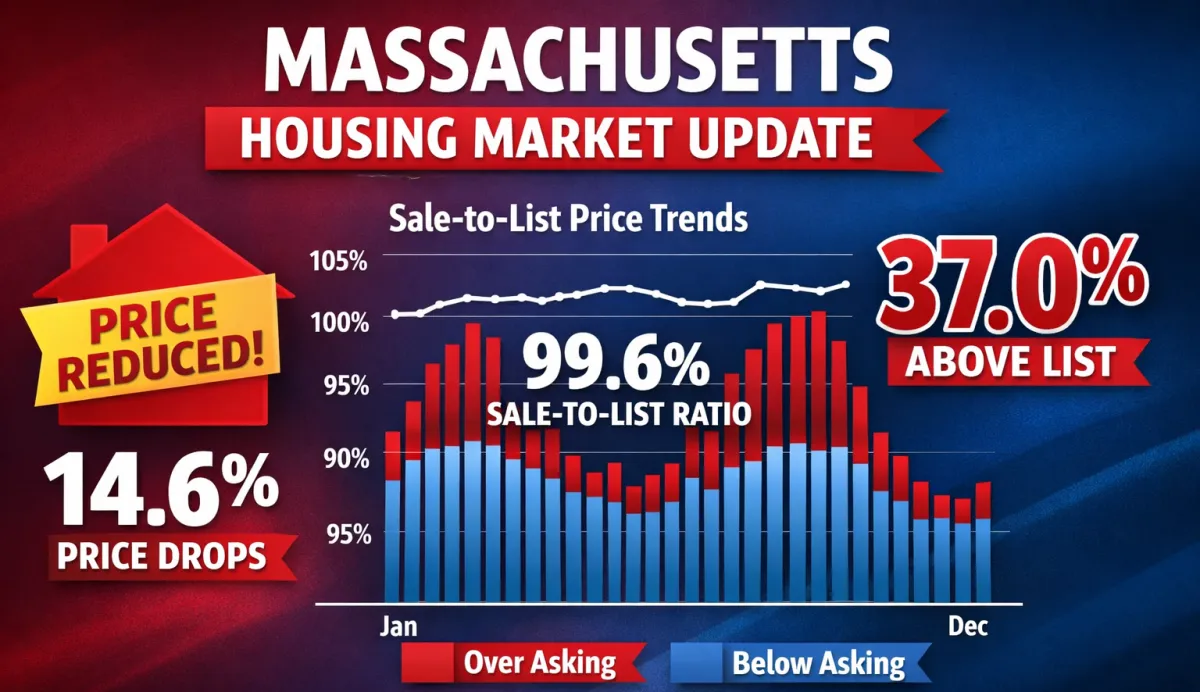
According to Redfin data, Massachusetts homes sold at a 99.6% sale-to-list ratio in February 2026, and 37.0% sold above list price. Only 14.6% had price drops.
At the same time, median days on market rose to 39 days, up seven days from a year earlier.
That is not a dead market. That is a market that punishes sloppy strategy faster.
Rhode Island tells a similar story. The Rhode Island Association of Realtors reported that January 2026 single-family sales fell 7.3% year over year, but median price still rose 7.3% to $499,000. Inventory remained at just 1.7 months of supply. In other words, activity may be uneven, but supply is still tight and pricing power has not disappeared.
Asking Price Is Not the Strategy
This is where a lot of sellers get misled.
They think the asking price is the strategy.
It is not.
Asking price is one move inside a larger plan. Real strategy is the combination of:
Pricing
Preparation
Presentation
Timing
Buyer psychology
Offer management, and
Negotiation.
When those pieces work together, the listing creates leverage. When they don’t, the seller ends up chasing the market down and calling it bad luck.
That’s why price reductions deserve more scrutiny than they usually get. A reduction is not always proof that the market turned against the seller. Sometimes it is proof that the original plan was disconnected from buyer behavior from the start.
Was the home positioned to create urgency? Was the pricing strategy designed to attract competition or just flatter the seller? Were the terms managed in a way that protected leverage? Was the property prepared to compete against the alternatives buyers were already watching?
Those are strategy questions. And they matter more than the number on the first line of the listing agreement.
88 Morgan Dr Shows What Happens When Strategy Matches the Property
A good example is 88 Morgan Dr in Taunton.
That property generated 17 offers and reached an agreed price 14.1% over asking, with very agreeable terms in the seller's favor.
That result did not happen because someone got lucky.
It happened because the strategy matched the property and the market.
That is the part too many people miss. Great listing outcomes are rarely created by simply naming a high price and hoping the market validates it.
They happen when the agent understands how to position the home, how to create competition, how to control timing, and how to manage the offer process in a way that gives the seller options.
Oh, and the buyers and buyer’s agents need to feel they can be competitive or they won’t submit an offer.
It’s so much more than just price and marketing.
The lesson is not that every home should be priced under market. The lesson is that every home needs a strategy built for its condition, location, buyer pool, and competitive environment. When that strategy is right, the seller does not just get a better number. The seller often gets better terms, cleaner contingencies, and more control.
That’s what I was able to achieve for my client.
The Questions Homeowners Should Be Asking Their Agent
Most homeowners ask the wrong question first.
They ask, “What do you think my house is worth?”
That matters, but it is incomplete. A better question is: “What is your strategy for getting the best combination of price and terms for my property in this market?”
That question forces a higher-level conversation.
Homeowners should also be asking:
How are you deciding the pricing strategy for this specific property?
Are you trying to create leverage, or are you just testing a number?
What current market data are you using to support that recommendation?
How will you position this home so buyers compete on both price and terms?
What would make you recommend pricing lower, at market, or above market?
How will you manage deadlines, contingencies, and seller-favorable terms if multiple offers come in?
What signs in the first week would tell us the strategy is working?
Under what conditions would a price reduction mean the original strategy was wrong?
Those questions do two things. First, they help a homeowner separate real strategy from generic sales talk. Second, they reveal whether the agent is thinking like a marketer and negotiator or just like someone filling in blanks on a CMA.
And as AI takes a more active role across many industries, the agents that fail to adapt and become an expert at all of the above… the things that make a true real estate professional… aren’t long for this business.
A Price Cut Usually Exposes the Plan
There are absolutely times when the market shifts, buyer demand softens, or a reduction becomes the right move. But sellers should stop treating price cuts like weather events that nobody could have seen coming.
In many cases, the reduction is not the story. The reduction is the receipt.
Re-read that line, please. I’ll wait…
It tells you the original pricing, positioning, or execution missed the mark.
That is the real takeaway for agents and homeowners alike. In a market where homes are still selling above list, supply is still tight, and strong properties can still create bidding pressure, the better conversation is not whether a seller can ask for more.
The better conversation is whether the agent has a strategy strong enough to justify the number, create competition around it, and protect the seller when the offers start coming in.
Because when the strategy is right, the market can work for you.
When the strategy is weak, the price reduction usually shows up right on schedule.
Massachusetts and Rhode Island housing data suggest that price reductions are not just random bad luck. In February 2026, Redfin reported that 37.0% of Massachusetts homes sold above list price, the sale-to-list ratio was 99.6%, and only 14.6% of homes had price drops. In Rhode Island, January 2026 inventory remained at just 1.7 months of supply while median single-family price rose 7.3% year over year. That means sellers should stop treating asking price as the strategy. Real strategy includes pricing, preparation, presentation, timing, offer management, and negotiation. The example of 88 Morgan Dr in Taunton, which drew 17 offers and an agreed price 14.1% over asking with strong seller-favorable terms, shows what can happen when the strategy matches the property and the market.
Sources: