The New Fireplace Rulebook: Why “Fake Flames” Are Winning Winter
Fireplaces used to be simple: wood or gas. Crackling logs or the blue whisper of a pilot light. But winter 2025 has introduced something new — something you’ve probably seen in a luxury listing, a hotel lounge, or, like Ryan this week, an ad you had to read twice:
The water-vapor fireplace.
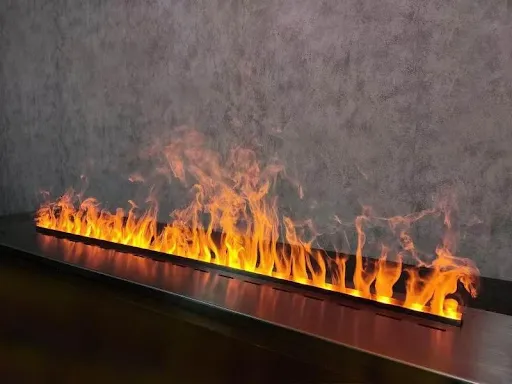
That’s right. No fuel. No chimney. No emissions. Just a tank of distilled water, LED lighting, and ultra-fine vapor that looks shockingly like real fire.
And it’s not just a novelty. It’s part of a complete rewrite of the fireplace playbook for New England homes — especially in condos, historic districts, and homes where installing a traditional vent is a nightmare.
Let’s break down what’s new, what’s practical, and what’s actually worth installing.
🔥 Electric fireplaces have moved from “builder-basic” to “architect-approved.”
Early electric fireplaces were… well, sad. Flat flames. Blue lights. Plastic logs.
But the new generation — especially the “linear” units you see stretching six feet across walls — have changed the design strategy in real estate:
Slimmer installs (4–6" depth instead of full framing)
Built-in heat control (or heat-off mode for summer ambiance)
Smart home integration
Realistic ember beds (crystals, stones, or imitation coal)
Builders love them because they avoid venting and code complications. Homeowners love them because they turn on with a button. Stagers love them because they photograph like a dream.
For tight New England homes? They create instant “luxury signal” without demolition.
💧 Water-vapor fireplaces: the surprising star of 2025
If Apple designed a fireplace, it would be this.
Water vapor + lighting → hyper-realistic flame effect. It moves like real fire because the vapor interacts with airflow in the room.
Why they’re blowing up:
Zero emissions → allowed in virtually any building
Cool to the touch → safer for kids & pets
No indoor air pollution
No gas lines or chimney needed
Architectural flexibility (island, double-sided, in-wall, or floating flames)
Ultra-quiet operation
Energy-efficient ambiance
And for MA/RI buyers increasingly concerned about indoor air quality, these fireplaces solve the “I want the vibe, not the health downsides” problem.
They’re showing up in:
Brownstone renovations
New condo builds
Boutique hotels
Luxury apartment lobbies
High-end spec builds in Norfolk, Plymouth, and Bristol counties
This is genuinely a new category of home feature, not a passing fad.
🧱 Why homeowners are pivoting away from wood and gas
New England has history with real fire — but the trend is shifting.
Wood-burning challenges:
Town smoke ordinances
Indoor air quality concerns
High particulate emissions
Creosote and chimney maintenance
Mess (ashes, soot, smoke smell)
Gas fireplace challenges:
Rising natural gas costs
Gas ban push in some MA towns (because the Commonwealth can’t regulate your life enough)
Safety inspections
Venting + code constraints
Carbon monoxide and air-quality debates
The “clean flame” alternatives avoid these problems entirely — and often cost far less.
📐 The design trend: fireplaces as art, not heat
Across Boston, Providence, Easton, and the South Shore, designers are using fireplaces not as heat sources, but as focal points:
Ribbon flames framed in stone
Room-divider fireplaces
Double-sided visual features
Minimalist black fireframes
Asymmetrical TV/fireplace pairings
Floor-to-ceiling LED-lit surrounds
Water-vapor units in particular create a soft, floating, almost sculptural flame. They add mood rather than heat — and in the era of warm minimalism, that’s exactly what homeowners are craving.
⚖️ Should people actually install one? Here’s the verdict.
✔️ Best for:
Condos
Tight spaces
Historic homes
Homes without chimneys
Families concerned about air quality
People who want the “luxury look” without major construction
❗ Watch out for:
Water-vapor fireplaces require distilled water only
They need occasional cleaning (minerals, buildup)
Some high-end units can cost $4,000–$12,000 installed
Not true heat source substitutes
⭐ Best use-case:
Ambiance + design impact. Not heating.
If a buyer walks into a house on a snowy December afternoon and sees that ribbon of soft flame dancing across the wall? You get an immediate “this place feels special” moment.
And moments sell homes.
🧾 References
Consumer Reports. (2024). Electric vs. Gas vs. Water Vapor Fireplaces: What’s Best? https://www.consumerreports.org
Architectural Digest. (2025, March 18). The Rise of Water Vapor Fireplaces in Modern Design. https://www.architecturaldigest.com
Massachusetts Office of Energy and Environmental Affairs. (2024). Indoor Air Quality & Combustion Appliances. https://www.mass.gov
Hearth, Patio & Barbecue Association. (2024). 2024 Fireplace Trends Report. https://www.hpba.org
Boston Globe Homes. (2025, January 8). Why New England Designers Are Switching to Electric Fireplaces. https://www.bostonglobe.com