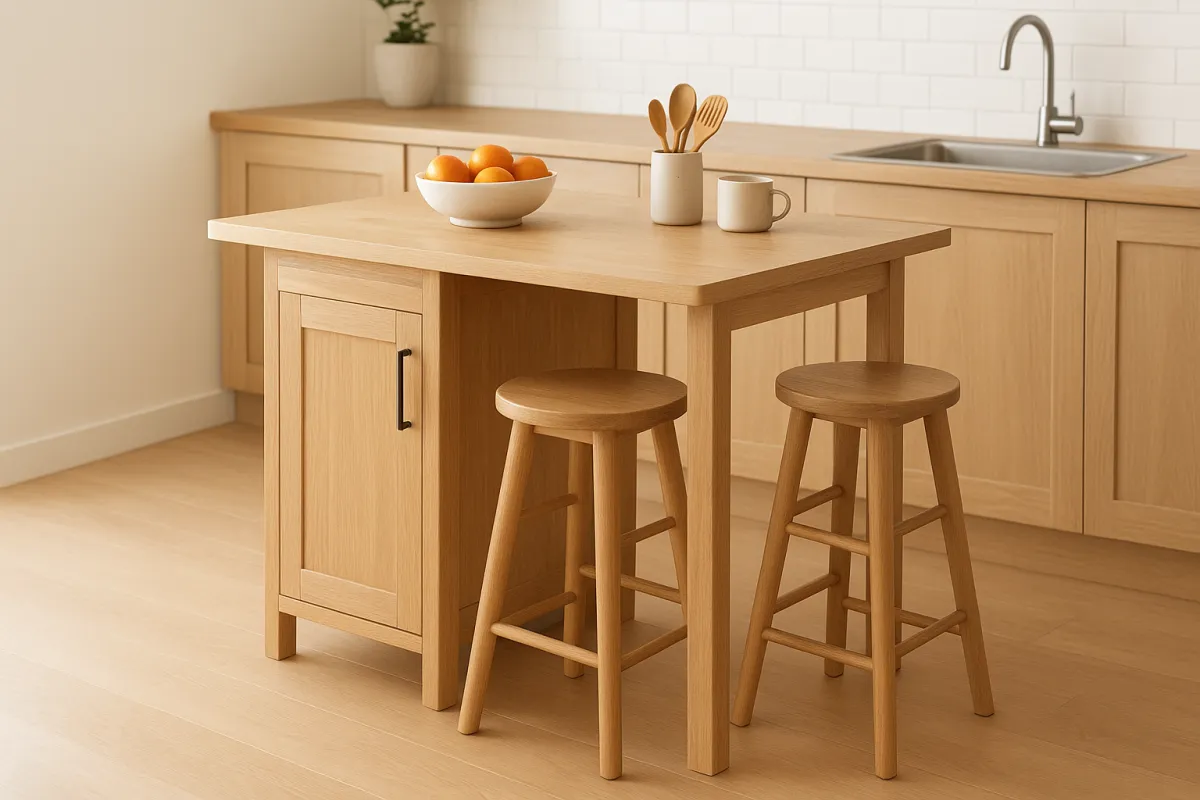
Why Kitchen Islands Are Getting Smaller (And Better)
Why Kitchen Islands Are Getting Smaller (And Why Homeowners Are Loving It)
The kitchen island has been the throne of American home design for nearly 20 years — oversized, overbuilt, and often overcompensating. If your island couldn’t seat four adults, hide a microwave, store a Dutch oven, and survive a Thanksgiving buffet, was it even an island?
But here’s the surprise design trend taking over New England homes this year:
Kitchen islands are getting… smaller. On purpose.
This isn’t a recession trend or a builder cost-cutting gimmick. It’s the result of a major shift in how people actually use their kitchens today.
And truthfully? It might be the most functional upgrade the modern kitchen has seen in a decade.
Let’s break down why… and, btw, I think this is foolish! Just reference my 12’ island from the last few weeks. It’s glorious!
🍽️ 1. “Cozy Flow” Is the New Luxury
Open-concept layouts aren’t disappearing, but they are softening. Homeowners want:
more intimacy
better conversation areas
less echo
warmer lighting
softer edges
spaces that feel lived in
and paths that feel natural
The giant 10–12 foot monolith in the center of the kitchen? It disrupts flow. (Sure… for those that don’t actually like to cook! But I digress…)
Smaller islands create:
easier circulation
cleaner sightlines
tighter social grouping
a more “hugged” feeling in the room
In a region like New England — with our older housing stock, quirky layouts, and anything-but-sprawling footprints — the new trend just makes emotional sense.
🔪 2. Oversized Islands Became Clutter Magnets
Big islands invited big… everything:
piles of mail
laptops
backpacks
Amazon boxes
kids’ homework
miscellaneous chargers
the slow creep of appliance clutter
Shrinking the island forces intentionality.
You get:
cleaner counters
tighter working zones
easier cleanup
fewer “dump zones”
Designers call this the “anti-drop-zone movement.” Homeowners call it: “Finally, I can find my keys.”
I can’t really argue with this one. I still think it’s worth it if you actually like to cook.
🧊 3. Appliances Are Moving Out of the Island (Finally)
A decade ago, builders stuffed:
microwaves
wine fridges
warming drawers
trash compactors
dishwashers
…into kitchen islands because it photographed well.
But in real life?
It was:
noisy
overpowered
awkward
hard to vent
hard to service
Shrinking the island means going back to:
perimeter cabinetry
tall storage walls
micro beverage centers
dedicated appliance banks
It’s better ergonomically and far easier to maintain.
Of course, this is all dependent upon the space you have for a kitchen. Too often, people tried to cram a massive island into a small space. In my case, the space is 20+ feet long by 17+ feet wide. It’s massive. We made the choice to use the space under the island and opted not to have upper cabinets making the space feel even larger.
🧱 4. Mixed Materials Are Harder to Pull Off on Huge Islands
One of the top design trends of the last three years is the two-tone kitchen:
different cabinetry colors
mixed countertop materials
wood + stone combinations
matte vs. satin finishes
inset lighting under cantilevered tops
But the bigger the island, the harder these styles are to balance.
Smaller islands make:
waterfall edges more elegant
stone slab selection easier
fluting and ribbing more subtle
furniture-style islands more realistic
color contrast more digestible
When you shrink the footprint, everything feels more intentional.
🪑 5. Smaller Islands → Better Seating
Ironically, giant islands often had awkward seating:
stools too far apart
people straining to talk
knees knocking against cabinets
no legroom
uncomfortable overhangs
too many seats jammed in
Today’s smaller islands often seat 2–3 people, but more comfortably.
It’s conversational. It’s cozy. It’s a two-coffee-mugs kind of moment.
For today’s modern household and shrinking family sizes, this makes sense.
🧩 6. The “Micro-Zone” Trend Is Taking Over
Designers are breaking big kitchens into smaller functional zones:
a coffee station
a smoothie/blender nook
a baking corner
a snack hub
a hidden prep pantry
a bar area for entertaining
With zones doing the heavy lifting, the island becomes:
✔️ a prep surface
✔️ a casual seating spot
✔️ a subtle design feature
Not the gravitational center of the entire floor plan.
🔥 7. It Photographs Better
Yes, really.
When your kitchen island is:
smaller
centered
clean
well-lit
…it makes the entire kitchen appear:
larger
more balanced
more luxurious
Perfect for real estate photography. Perfect for staging. Perfect for online listings where buyers make split-second decisions.
I’ll still take my chances with my oversized island and kitchen. :-)
🧭 8. So… should homeowners shrink their island?
✔️ Best candidates:
Homes with tight layouts
2000s and early 2010s builds with oversized islands
New England colonials with odd geometry
Condos where the island dominates the living space
Empty nesters who don’t need seating for six
❗ Not ideal for:
Large families that truly need the space
Multi-cook households
Homes where the island doubles as the main dining area
⭐Overall verdict:
Shrinking the island often makes the kitchen feel more custom, more functional, and more premium — especially in MA and RI where efficient, elegant use of space is everything.