Boston’s Oldest Wooden Home Reopens — and It’s Still Standing for a Reason
Boston’s Oldest Wooden Home Reopens — and It’s Still Standing for a Reason

In a city that constantly talks about what’s being built next, it’s easy to forget that some of Boston’s most important structures aren’t new at all — they’ve simply endured.
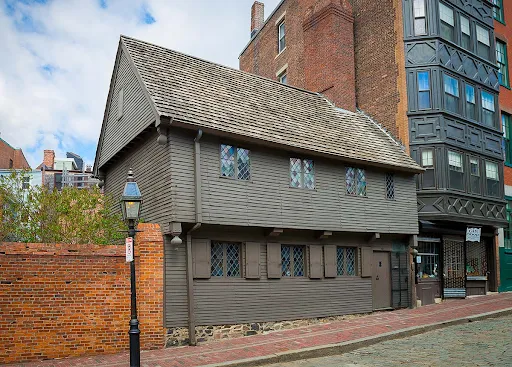
This winter, Paul Revere House, widely recognized as Boston’s oldest surviving wooden home, quietly reopened to the public after a period of preservation work. And while it’s easy to treat that as a tourism footnote, the story underneath is far more relevant — especially if you care about housing, longevity, and why some homes last centuries while others struggle after a few decades.
Built around 1680, the house predates the United States itself. It has survived fires, wars, urban redevelopment, climate shifts, and waves of modernization that wiped out most structures of its era. It wasn’t preserved because it was fancy. It was preserved because it was sound — structurally thoughtful, adaptable, and well cared for over time.
That’s the part people often miss.
Why this house still matters
The Paul Revere House isn’t impressive because it’s old.
It’s impressive because it kept working.
Over its lifetime, it has been:
a private residence
a rental property
a storefront
a boarding house
a historic site
It evolved without being erased.
That adaptability — the ability to change use without losing integrity — is exactly what modern housing conversations circle back to again and again. Good bones matter. Flexible layouts matter. Maintenance matters.
This isn’t nostalgia. It’s a case study.
A quiet lesson in durability
Wooden homes are often dismissed today as fragile or temporary compared to steel and concrete. Yet here’s a wooden structure that has stood for more than three centuries in a dense coastal city.
Why?
modest scale
repairable materials
incremental updates instead of total replacement
respect for original structure rather than fighting it
In a time when we talk constantly about sustainability, there’s something instructive about a building that didn’t need to be torn down and rebuilt every generation to stay relevant.
Why its reopening resonates now
The timing matters.
Boston is wrestling with:
housing shortages
zoning debates
historic preservation conflicts
climate resilience
The reopening of the city’s oldest wooden home isn’t about celebrating the past — it’s about reminding us that durability and adaptability are not opposing goals.
They’re the same goal.
You don’t need every building to be preserved forever. But when a structure can evolve instead of being discarded, it creates continuity — cultural, architectural, and economic.
The quiet takeaway
The Paul Revere House isn’t a museum piece frozen in time. It’s proof that housing, when built thoughtfully and maintained consistently, can outlast trends, technology, and even cities as we know them.
In a week full of headlines about what’s broken, it’s refreshing to see something that still works.
Three hundred years later.
References
Paul Revere Memorial Association. (2025). Paul Revere House Reopens Following Preservation Work. https://www.paulreverehouse.org
Boston Globe. (2025). Boston’s Oldest Home Reopens to the Public. https://www.bostonglobe.com
National Park Service. (2024). Paul Revere House: Historical Overview. https://www.nps.gov