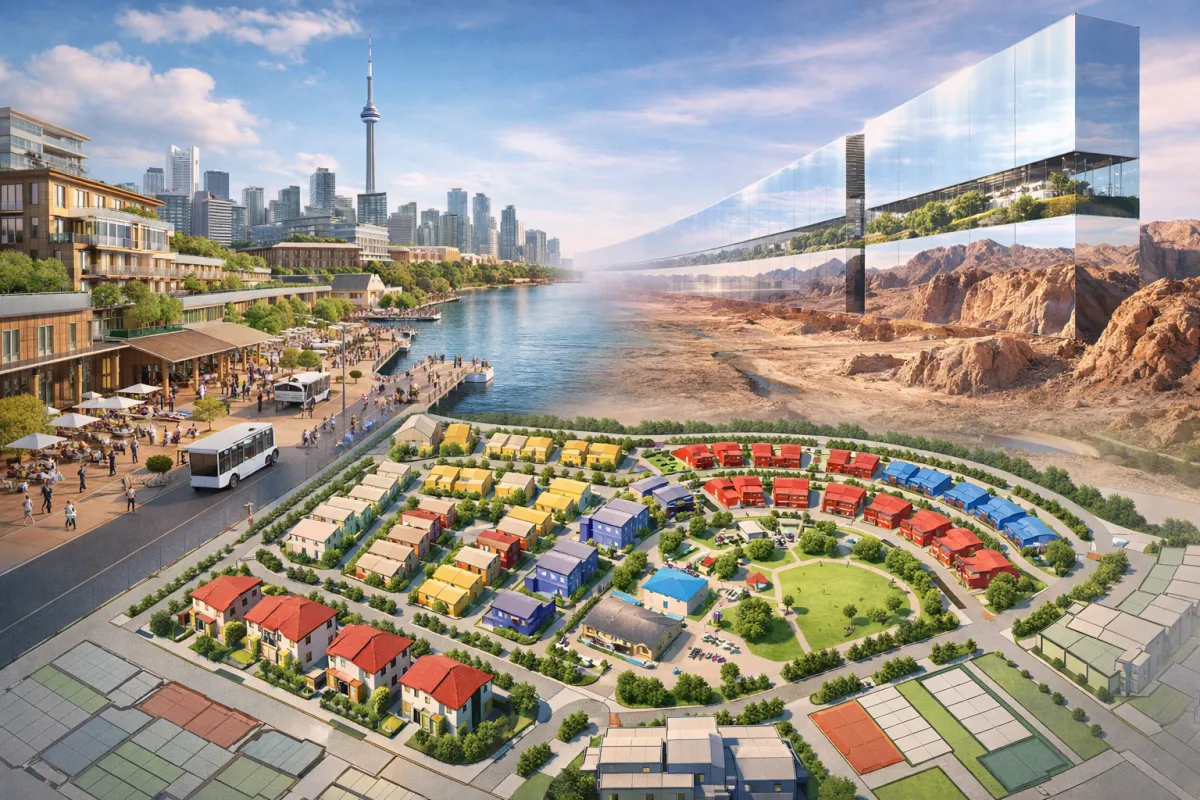
AI Is Designing Neighborhoods Now. Not Houses. Neighborhoods.
AI Is Designing Neighborhoods Now. Not Houses. Neighborhoods.
It’s been a weird newsweek with respect to AI. We’ve reached the point where AI isn’t just writing emails or creating mildly terrifying headshots.
Anthropic recently posted their “Hit List”-- a list of industries that are already being wiped out by AI… and what they suspect will be next in 2026.
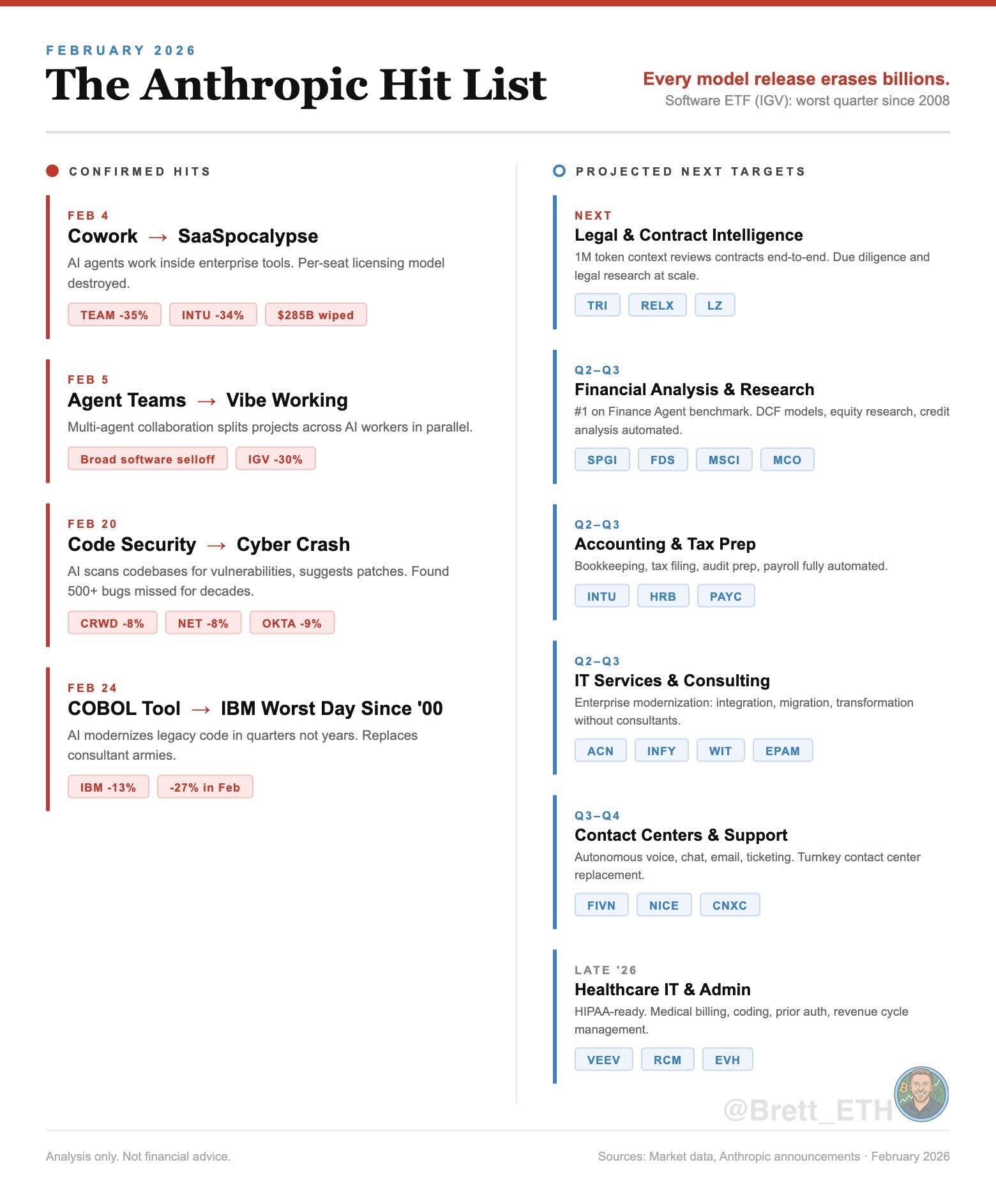
And I noticed something in the news that didn’t make the list… and maybe because the list was focused on 2026 and this may be a 2027 thing, but…
It’s designing neighborhoods.
Not decorating them. Not naming them. Designing the actual layout — streets, lot placement, density, traffic flow, drainage, green space.
And yes, this is happening in real life.
🇨🇦 Toronto: The Early Big Swing
Sidewalk Labs, a company backed by Alphabet (Google’s parent), released detailed plans for a Toronto waterfront community that used AI modeling to optimize:
Traffic patterns
Energy usage
Mixed-income housing density
Modular building systems
The project ultimately stalled over privacy and governance concerns — but full master plans were released. AI-driven neighborhood design had officially left the lab.
BEFORE:
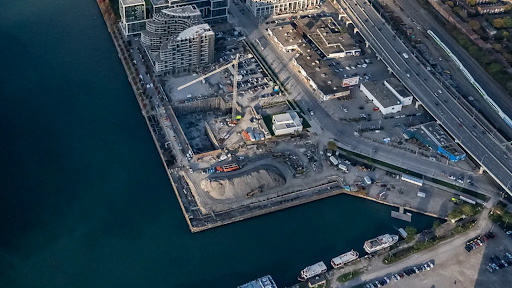
The 12-acre site in Quayside is currently being developed following Sidewalk Labs' contract win
PROPOSED AFTER:
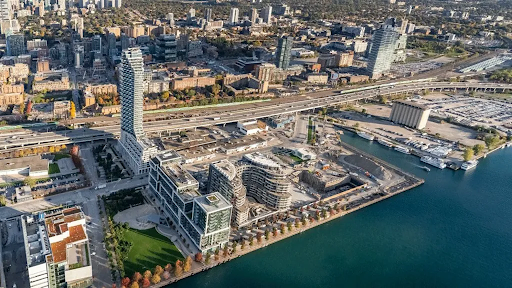
The former dockland and industrial area of Toronto sits on the edge of Lake Ontario
🇸🇦 Saudi Arabia: The Line
I first read about “The Line” in Popular Science probably 10-15 years ago. It seemed fantastical. “The Line” is a proposed 170-kilometer linear city, proposed to home 9 million people, designed using AI simulations for:
Transit efficiency
Climate control
Energy optimization
Density stacking
Highly polished preliminary plans have been released. Whether it fully materializes as imagined is another question — but AI-driven modeling is central to the planning process.
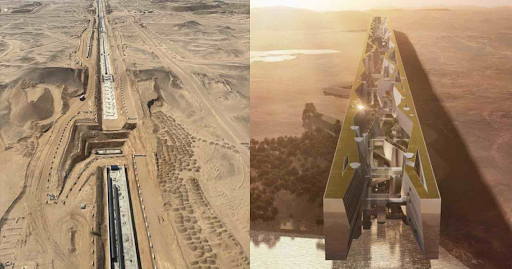
Courtesy: petapixel.com
You can view a video about The Line on YouTube.
🇺🇸 Closer to Home: Subdivisions in Texas & Arizona
Developers are quietly using platforms like TestFit to generate thousands of subdivision configurations in minutes.
The AI optimizes:
Lot yield under zoning constraints
Parking ratios
Building envelopes
Drainage and utility feasibility
To the naked eye, the finished plan looks like a normal subdivision.
You’d never know a machine drafted version 1.0.
So What Does This Mean?
Right now, AI isn’t deciding whether your shutters are black or navy.
It’s doing the heavy math:
Predicting traffic bottlenecks
Simulating stormwater flow
Modeling sunlight angles
Stress-testing density
Optimizing infrastructure cost
Instead of planners debating one concept at a time, AI can simulate thousands of versions and identify which layout performs best based on the goals you feed it.
More walkability? Less congestion? Higher affordability? Lower maintenance costs?
It can optimize for all of it simultaneously. That’s just not something we’ve been able to do at all.
The Real Estate Angle
If AI reduces planning mistakes — and planning mistakes are common and expensive — that could mean:
More resilient neighborhoods
Lower long-term infrastructure costs
Smarter density
Potentially stronger long-term property performance
But neighborhoods aren’t spreadsheets. Can an algorithm create charm? Could AI have created Beacon Hill? Or downtown Newport? Or Rockport, MA?
I don’t have that answer.
And while we may not be at “robot-designed cities” yet, we are absolutely at “AI-drafted master plans.”
I'm not an overly religious person, but I do hold certain beliefs and values instilled in me from youth. While I rarely paid attention in CCD because I was dreaming of getting to the basketball court to practice, one discussion that stuck with me centered around the concept of perfection. True, unblemished perfection is solely the domain of the divine; only God can create something truly perfect.
Our very imperfections are, in a sense, a defining characteristic of our humanity. They are the unique contours that shape us as individuals. It is our mistakes, our limitations, our personal quirks—that define our true value.
This principle extends to the realm of human creation. The things we build, the art we produce, the relationships we nurture, are imbued with value precisely because they bear the marks of our own fallibility.
Will these algorithmically perfectly executed plans lack a certain soul that makes people feel oddly uncomfortable? Is it the evidence of human effort and error that gives meaning and depth to what we create? Is it our inability to achieve the divine standard of perfection that gives significance to our striving? And is that what gives something the human spirit?
Regardless of what you believe or how much you hide from progress, we’re about to find out.